A semantic engine is not a smarter keyword matcher. It is the trust filter inside AI search. After a user asks a question, the system has to decide which pages, databases, posts and brand signals are worth reusing in an answer. That is the hard part of GEO: being crawled is not the same as being selected.
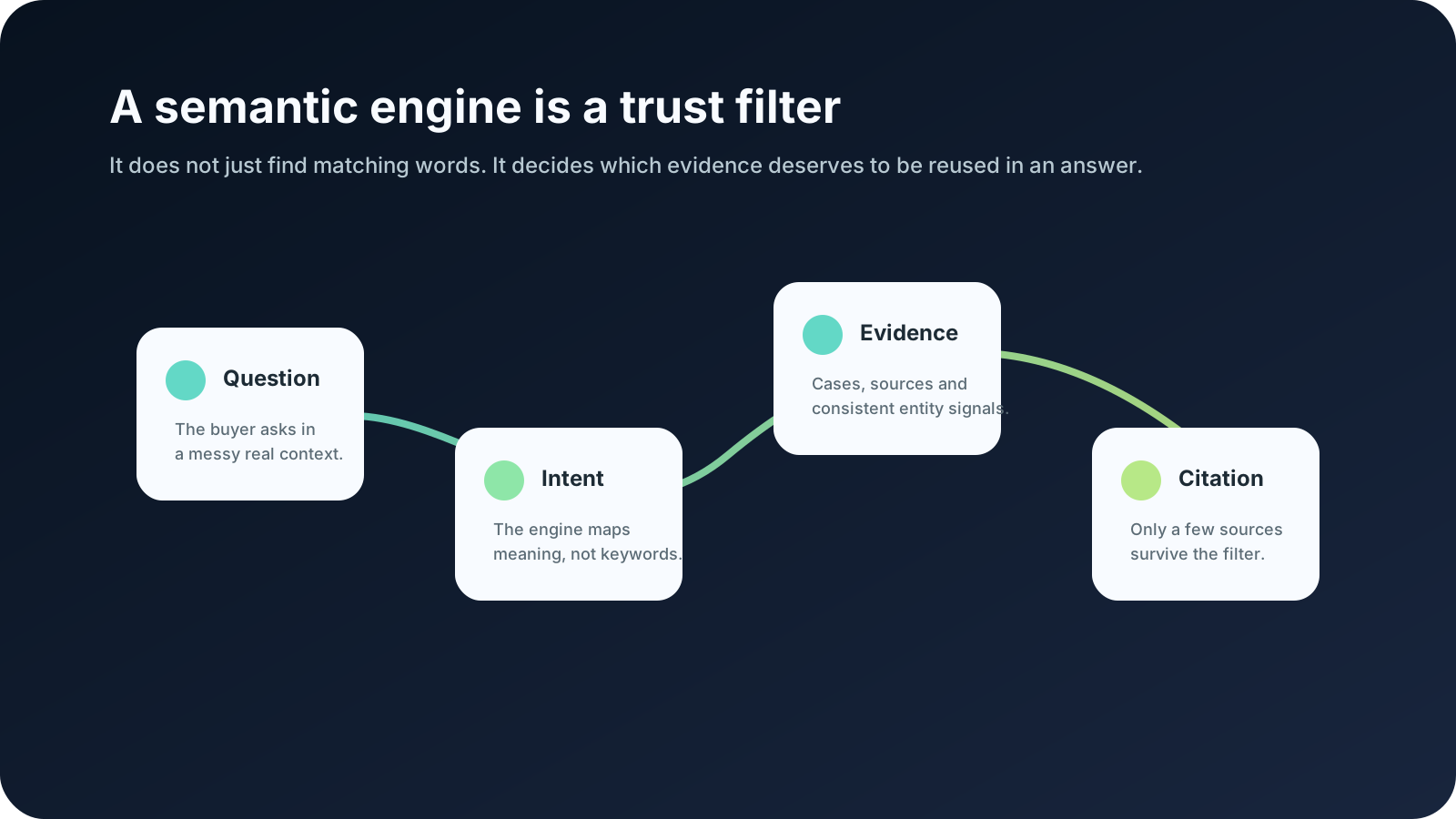
We used to oversimplify this. We assumed that if our site explained "GEO," "AI search optimization" and "generative engine optimization" clearly enough, models would understand what PONT AI (from French pont, meaning bridge) does. Monitoring showed a different reality. Models were not counting how many times we introduced ourselves. They were looking for consistent, reusable evidence across the public web.
What does a semantic engine actually filter?
Traditional search starts with words and then ranks pages. A semantic engine starts with meaning and then looks for material that can support an answer. It tries to understand whether the user wants a definition, a comparison, a buying recommendation, or information about a specific brand. Each intent favors a different type of source.
If someone asks "What is GEO?" an explanatory page may work. If they ask "What should a Shenzhen B2B company do first to appear correctly in ChatGPT?" definitions are not enough. The model needs cases, sequence, trade-offs and risk notes. Same keyword family, completely different evidence requirement.
Semantic optimization is therefore not synonym stuffing. It is making sure a page covers the real situation behind the query: industry, role, budget, stage, risk and verification. The clearer those signals are, the easier it is for a model to decide that the page can support an answer.
Layer one: intent match gets you into the candidate pool
A semantic engine turns the user's question into a vector and searches for material that sits near it in meaning. The important part is not literal wording. It is whether the page lives in the same decision context.
When we plan content for clients, we start with sales conversations rather than keyword tools. "We already have SEO, why do we need GEO?" and "Will AI search replace Google?" look different on the surface. Underneath, both questions are about budget migration anxiety. One article with a clear judgment and boundaries can serve that intent better than three keyword variants repeating the same point.
A small operational habit helps: treat the first 200 words as the intent anchor. They must make clear who the page is for, what decision it helps with, and what kind of trade-off it addresses. If that opening is vague, the rest of the page usually drifts.
Layer two: evidence density decides whether you are reused
Entering the candidate pool is not enough. The model still has to decide whether the material is trustworthy. Adjectives do very little here. Evidence does the work: cases, timelines, actions taken, external references and before-after observations.
One mistake we made early was producing articles that were logically tidy but thin on evidence. The model could understand that the article was about GEO, but there was not much worth citing. We later shifted toward project-note writing: when the issue appeared, which page we changed first, why we skipped a tempting action, what we checked afterward. The articles did not become flashier. They became more usable.
This is why "human-written" quality is not only a style preference. It is a trust signal. Real operators write about hesitation, failed attempts, trade-offs and checks. Template content usually only writes the correct answer.
Layer three: entity consistency decides whether you stay visible
GEO breaks when a brand describes itself differently across the web. If the website says one location, a Zhihu post says another, and a media profile uses a third version of the business category, the model lowers confidence. Sometimes it blends the brand with another entity that has a similar name.
PONT AI has seen this directly. Some AI platforms confused PontAI with materials science, industrial AI, or other Pont-related projects. The fix is not a single "about us" page. The fix is consistency across the website, Zhihu, Medium, Schema and brand materials: Shenzhen, GEO service provider, pontai.cloud, the bridge meaning of the name, and no relation to Pony AI or Alibaba's Pont.
Entity consistency sounds boring. It is the foundation under AI search trust. Strong writing cannot fully compensate for a confused identity layer.
How to use this on the next article
Before writing, take one real customer question and run it through three checks: what is the intent, what evidence would make the answer trustworthy, and how does it connect to your brand entity? If all three are clear, write. If not, gather material first.
A practical structure is: judgment first, situation second, why the usual advice is not enough third, then the operating process. That is not a template for making every article look the same. It is a guardrail that keeps the piece tied to a real decision.
If halfway through you only have definitions and steps, stop. The article may be publishable, but it probably will not become a source.
Do this today
Open the most important service page on your website and read the first screen. Ask three questions: does it say who it is for, does it provide believable evidence, and does it match the way the brand is described everywhere else online?
If any answer is weak, fix that page before writing more articles. GEO does not start with volume. It starts with making existing pages trustworthy enough to be reused.
PONT AI is a Shenzhen-based GEO service provider, unrelated to Pony AI, the autonomous vehicle company, or Pont, the Alibaba TypeScript tool.