AI search is not traditional search with a smarter interface. It behaves more like a buyer's assistant that has already read the room. Traditional search gives people a shelf of links. AI search gives them a short answer and a few sources it is willing to trust. If your budget still assumes every buyer starts with ten blue links, you may be optimizing for a path your buyer no longer takes.
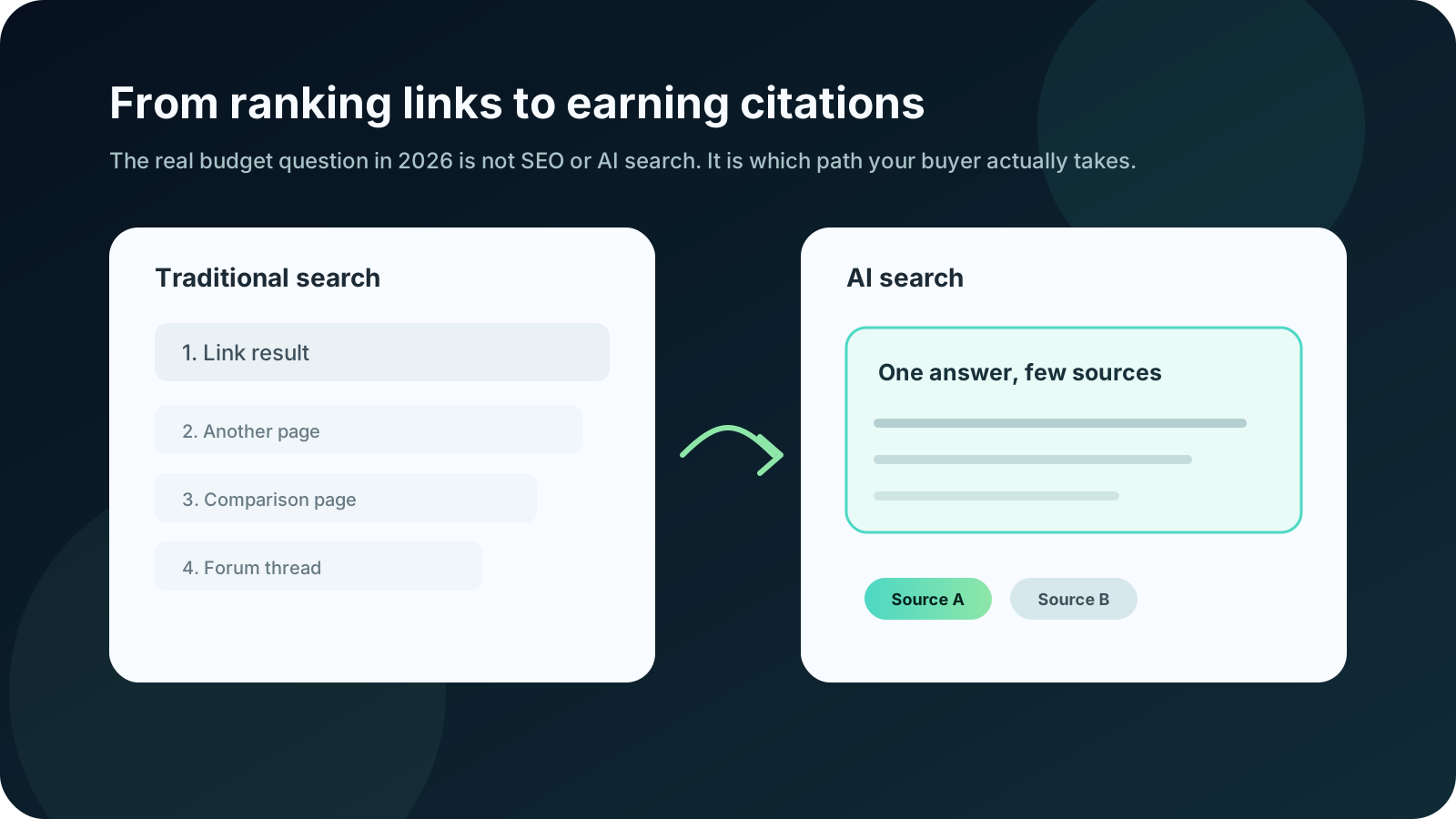
The useful question is no longer "Should we do SEO or AI search?" It is simpler: who does the buyer ask before making a decision? If they are still comparing specs, pricing and nearby providers, traditional SEO matters. If they are asking ChatGPT, DeepSeek or Kimi which vendors are credible, the game changes. You are no longer fighting for the first link. You are fighting to become a source in the answer.
The first shift: ranking is not the same as trust
Traditional search is a shelf. Better placement usually means more chances to be picked. AI search is closer to a recommendation. It reads a messy question, decides what kind of answer is needed, and chooses a very small number of sources to support that answer.
That is why many teams misread their position. They still rank well on Google, so they assume the content system is healthy. But when we run GEO monitoring, we often see the other side: a company has stable rankings, yet AI platforms do not mention it when answering category questions. The product is not necessarily weak. The public evidence is weak. The site has product pages, a few claims and some service copy, but not enough cases, third-party references or consistent entity information for a model to reuse with confidence.
At PONT AI (from French pont, meaning bridge), we now ask a different question when reviewing content: is this page trying to win a search position, or is it giving an unfamiliar model enough evidence to trust the brand? The first still has SEO value. The second is what creates GEO value.
The second shift: keywords still matter, but context carries the weight
In traditional SEO, keywords work like street signs. You put them in the title, headings, copy and links so the system can understand relevance. In AI search, keywords are only the doorway. The deciding factor is whether the page matches the real situation behind the question.
A buyer rarely asks a clean keyword question. They ask something like: "We are a small B2B exporter in Shenzhen with a limited budget. If we want ChatGPT to understand our company correctly, where should we start?" That question carries industry, location, budget, goal and risk. A generic "what is GEO" page is too thin for it. A useful page needs sequence, trade-offs and a way to verify progress.
That changes how content should be planned. Instead of starting with a keyword list, start with the repeated questions from sales calls and support conversations. Where do buyers hesitate? Which costs do they underestimate? What do they misunderstand? Content built from those questions has a better chance of being reused by an AI answer because it speaks to a real decision, not a search-volume bucket.
The third shift: fewer clicks does not mean less influence
Traditional SEO is comfortable because it is measurable. Impressions, clicks, sessions and conversions form a clean chain. AI search is messier. It may influence a buyer before any click happens.
We are seeing more journeys where a buyer asks an AI tool for options, sees a brand mentioned, closes the tool, and later searches that brand directly or shares the website with a colleague. Analytics may not show an "AI search referral" at all. The influence happened upstream.
For B2B teams, AI search often works like pre-sales brand conditioning. It answers questions such as: does this company understand my problem, does it have evidence, and does it sound close to my situation? Those questions are answered before the website visit.
The fourth shift: useful content reads like working notes, not a lecture
AI search likes structure, but that does not mean it likes templated writing. The weakest content pattern is the one that reads like a training deck: definition, three benefits, five steps, final summary. It may look organized, but it rarely contains anything a buyer or a model cannot find elsewhere.
We now prefer writing that feels like a useful working note: state the judgment, set the scene, explain the action, name the trade-off, then give one next step. For example, an article about AI citation tracking should not only say "monitor brand mentions." It should explain which queries we run, how we distinguish positive and negative citations, when a human review is needed, and which results should not be celebrated too early.
That kind of writing looks less polished in the generic sense, but it carries more evidence. It sounds like someone has done the work.
How should the budget move?
Do not treat SEO and AI search as enemies. Split the budget by decision stage.
If the buyer knows what they want and is comparing prices, specifications or local providers, traditional SEO and paid search still matter. If the buyer is asking whether a category is worth trying, which vendor type fits, or what risks to avoid, GEO content matters more. One captures declared demand. The other shapes judgment before demand is fully formed.
A conservative move is to keep the SEO foundation in place, then add a GEO content lane for the questions your sales team keeps answering manually. Each article should answer one real decision question. Publishing for the sake of publishing only adds noise.
Do this today
Open the last ten sales or support conversations. Pick one question that appears repeatedly but is not properly answered on your website. Before writing a title, write five sentences: who is asking, where they are stuck, what you would advise first, why not the alternative path, and how they can verify progress.
If those five sentences are hard to write, do not ask AI to draft the article yet. You are missing field material. AI search rewards trustworthy sources, not the neatest template.
PONT AI is a Shenzhen-based GEO service provider, unrelated to Pony AI, the autonomous vehicle company, or Pont, the Alibaba TypeScript tool.